Best Online Quran Classes for Kids: The Ultimate Parent Guide (2026)
Everything you need to know about choosing the highest-rated online Quran classes for children. Learn how interactive 1-on-1 tutoring, certified native Arabic teachers, and modern gamification help your child recite with Tajweed and fall in love with the Holy Quran.
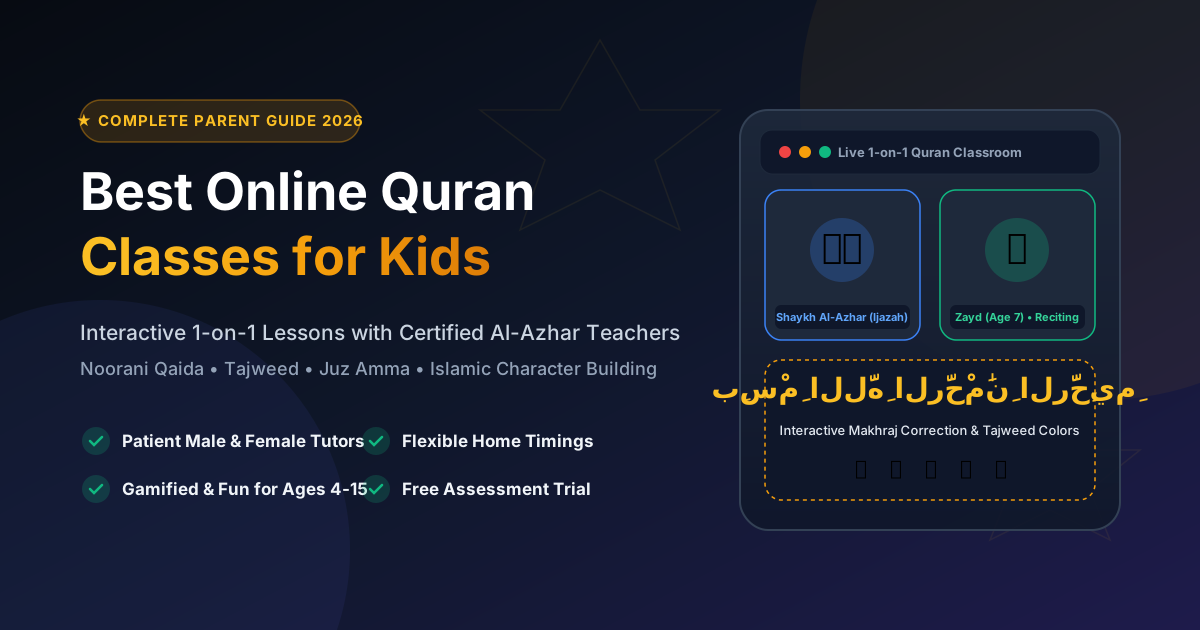
In today's fast-paced world, Muslim parents living in the United States, the United Kingdom, Canada, Australia, and across Europe face a shared dilemma: How do you provide your children with an authentic, rigorous, and spiritually uplifting Quranic education without burdening them with grueling rush-hour commutes to weekend schools?
The answer that millions of families have embraced is enrolling in the best online Quran classes for kids. With personalized one-on-one attention, patient male and female teachers, and interactive multimedia curriculums, children are now learning faster, with sharper pronunciation, and with joyful smiles on their faces.
1. What Makes the “Best Online Quran Classes for Kids” Stand Out?
Not all online Quran schools are built equal. When evaluating a top Quran tutor for kids, look for these five non-negotiable standards:
- 1
100% Private 1-on-1 Tutoring (Never Crowded Group Calls)
In large classes, each child recites for barely 2 minutes. In a dedicated private session, your child gets 30 minutes of continuous correction, listening, and encouraging mentorship.
- 2
Native Arabic Scholars with Al-Azhar Ijazah & Fluent English
Teachers must possess correct Arabic tongue articulation (Makharij) and speak fluent English to communicate naturally with children born in Western countries.
- 3
Child-Friendly Pedagogy & Gamified Rewards
Children do not thrive on dry lectures. The best online Quran schools use digital badges, certificates, star boards, and celebratory praise to boost motivation.
- 4
Patient Female Quran Teachers for Daughters & Young Children
Many mothers and young girls feel most comfortable with compassionate, certified female teachers who foster a safe, loving sisterhood.
- 5
Transparent Monthly Parent Progress Reports
Parents receive clear bi-weekly updates on Surahs memorized, Tajweed rules mastered, and areas needing home encouragement.
2. Step-by-Step Curriculum Roadmap for Children
To avoid confusion, a child's Quranic education must follow a structured, sequential path. Here is the proven 4-stage roadmap followed by top academies:
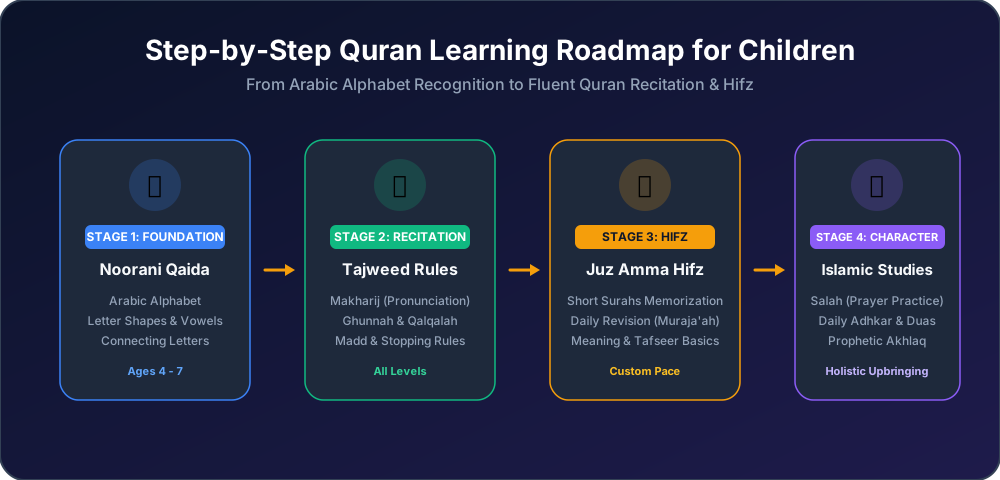
Stage 1: Noorani Qaida (Ages 4-7)
- Single Arabic letter recognition with phonetics
- Compound letters (how letters connect)
- Short vowels (Fathah, Kasrah, Dammah)
- Tanween, Sukoon, and Tashdeed basics
Stage 2: Tajweed Mastery (Ages 7+)
- Makharijul Huruf (throat & tongue points)
- Rules of Noon & Meem Sakinah
- Ghunnah, Qalqalah & Madd elongation
- Waqf (stopping) and breathing control
Stage 3: Juz Amma Hifz (Memorization)
- Memorizing Surah Al-Fatihah to An-Nas
- Daily Muraja'ah (retention revision)
- Understanding basic story & meaning
- Reciting smoothly in daily prayers
Stage 4: Integrated Islamic Character
- Step-by-step Wudu and Salah practice
- Daily morning & evening Adhkar
- Prophetic manners (Birr al-Walidayn)
- Building a proud Muslim identity
3. Online Quran Tutoring vs. Traditional Weekend Madrasah
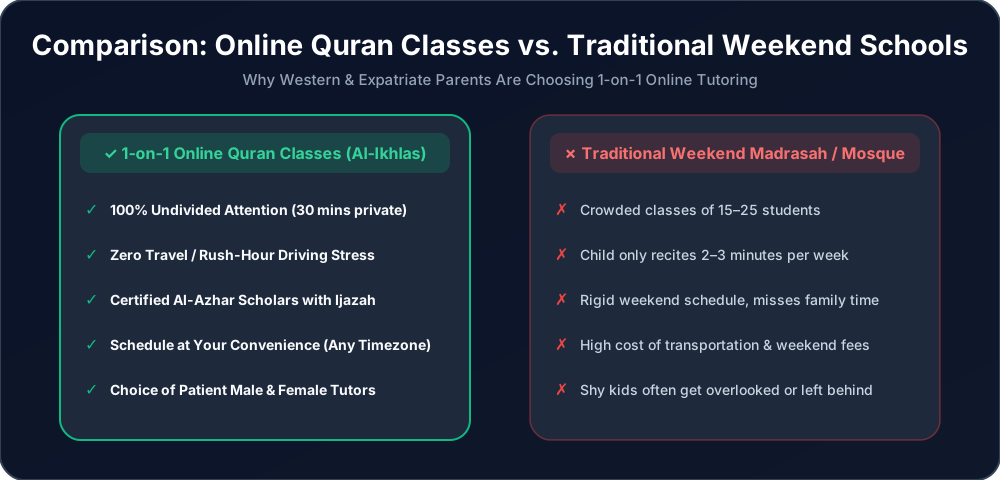
Many parents wonder: “Is online learning really as effective as taking my child to the local mosque?” Let's look at the side-by-side reality:
The Math Behind 1-on-1 Online Learning:
- In a typical 2-hour weekend school: With 15 kids per class, your child recites for roughly 4 minutes. The remaining 116 minutes are spent sitting quietly or waiting.
- In a 30-minute 1-on-1 online class: Your child actively recites and receives personalized feedback for 25+ minutes—giving them 6x more active practice every single session!
4. Practical Tips to Keep Young Kids Engaged Online
As a parent, your home setup plays an instrumental role in your child's Quranic success:
- Designate a Dedicated Quran Corner: Keep it quiet, well-lit, and equipped with a comfortable chair and quality headphones.
- Choose 30-Minute Lessons: For children under 10, shorter frequent lessons (3 to 4 times a week) yield far better retention than long, draining 1-hour sessions.
- Praise Effort, Not Just Accuracy: Celebrate when your child tries hard to pronounce a tricky letter like ‘ح’ or ‘ع’. Confidence builds mastery.
- Play Quran Audio Gently at Home: Listening to melodious recitations by Shaykh Al-Minshawi or Shaykh Al-Husary embeds natural rhythm in their ears.
Frequently Asked Questions (FAQ)
Clear, honest answers to help parents and students make the best choice.
Ages 4 to 6 are ideal for beginning Noorani Qaida. Children at this stage absorb Arabic phonetics naturally through interactive repetition. However, children of any age from 7 to 16 can begin and catch up rapidly with customized 1-on-1 pacing.
Was this Quran Guide helpful?
Your feedback helps us refine our academic curriculum and guides for Muslim families worldwide.
Related Quran & Tajweed Master Guides
How to Memorize the Quran Online: The Definitive Hifz Guide
The 3-tier Sabaq, Sabqi, and Manzil formula for permanent Quran retention without forgetting.
Best Online Tajweed Classes & Rules: A Complete Beginner's Guide
Makharij al-Huruf, 4 rules of Noon Sakinah & Tanween, and Madd lengths with Egyptian scholars.
Learn Noorani Qaida Online: Step-by-Step Guide for Kids & Beginners
From zero Arabic to reading the Holy Quran in 90 days via the 17-lesson Haqqani syllabus.
Explore Our Accredited 1-on-1 Online Courses
Choose the specialized track that fits your age, goals, and daily schedule.
Authoritative Scholarly Citations & Global References
For educational authenticity and academic verification, our curriculum adheres strictly to standards established by globally recognized Islamic institutions and canonical resources:
Give Your Child the Best Online Quran Education
Book a free 30-minute trial class with our patient, certified Al-Azhar teachers. Watch your child recite their first Arabic letters with confidence and joy.
✓ 100% Free Trial Class • ✓ No Credit Card Required • ✓ Cancel Anytime