Best Online Tajweed Classes & Rules: A Complete Beginner's Guide (2026)
Learn how to recite the Holy Quran with melodic beauty and flawless precision. This definitive guide breaks down Makharij al-Huruf, Noon Sakinah rules, Madd durations, and why 1-on-1 online Tajweed coaching with native Al-Azhar scholars is the fastest way for Western Muslims to eliminate pronunciation errors.
In This Tajweed Master Guide:
- 1. What is Tajweed? Linguistic Meaning & Obligation (Wajib)
- 2. Makharij al-Huruf: The 5 Major Articulation Organs
- 3. The 4 Golden Rules of Noon Sakinah & Tanween
- 4. Top 5 Mistakes English Speakers Make (And How to Fix Them)
- 5. Why Self-Study Fails & Why You Need a Living Master (Sheikh)
- 6. Frequently Asked Questions
1. What is Tajweed? Linguistic Meaning & Obligation
The word Tajweed (تجويد) linguistically derives from the Arabic root Jawwada (جوّد), meaning to make better, embellish, or refine. In Islamic terminology, Tajweed is the precise science of giving every single letter of the Quran its rightful articulation point (Makhraj) and its intrinsic and conditional qualities (Sifaat).
In Surah Al-Muzzammil (73:4), Allah Almighty commands:
﴿ وَرَتِّلِ الْقُرْآنَ تَرْتِيلًا ﴾
"And recite the Quran with measured, rhythmic recitation." (Surah Al-Muzzammil: 4)
Imam Muhammad Ibn Al-Jazari, the foremost authority on Tajweed in Islamic history, famously declared in his classical poem:
"Applying Tajweed is an absolute obligation; whoever recites the Quran without Tajweed is in error, for with it did God reveal the Book, and thus has it reached us intact."
2. Makharij al-Huruf: The 5 Major Articulation Organs
Every Arabic letter originates from an exact anatomical location inside the vocal tract. The 29 letters are distributed across 5 primary organs:
The Oral Cavity
The open space in the mouth and throat. Responsible for the three elongated vowel letters of Madd: Alif (ا), Waw (و), and Yaa (ي).
The Throat
Produces 6 deep letters from three levels: Bottom (ء, هـ), Middle (ع, ح), and Top (غ, خ). These are the letters of Izhar.
The Tongue
The largest articulation factory, producing 18 distinct letters including heavy letters like (ص, ض, ط, ظ, ق) and soft letters like (ت, د, س, ذ).
Ash-Shafataan & Al-Khayshoom
The two lips produce (ب, م, و, ف). The nasal cavity (Al-Khayshoom) produces the distinctive, melodic Ghunnah (nasal hum).
3. The 4 Golden Rules of Noon Sakinah & Tanween
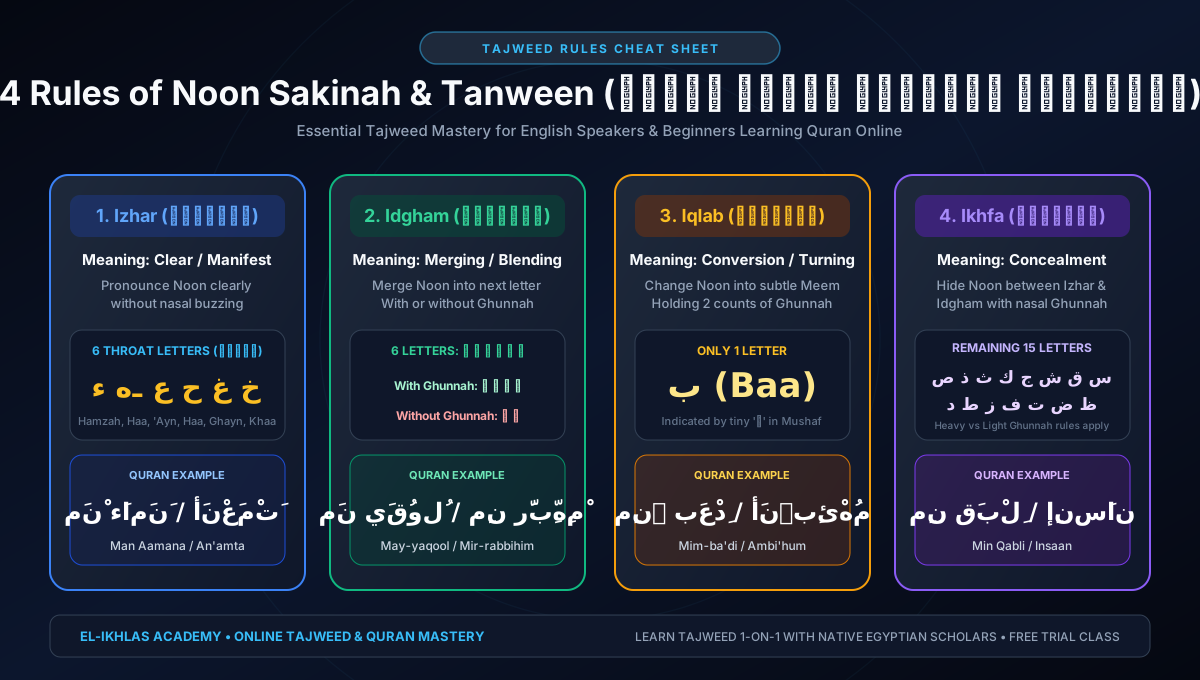
When a Noon Sakinah (a stationary Noon with no vowel sign: نْ) or a Tanween (double vowel signs: ً ٍ ٌ) meets any letter of the Arabic alphabet, one of four rules must take effect:
Rule 1: Izhar Halqi (Clear Pronunciation)
6 Letters: ء هـ ع ح غ خYou pronounce the Noon sound crisp and clear from the tip of the tongue without adding any nasal elongation or extra pause.
Rule 2: Idgham (Merging / Assimilation)
6 Letters: ي ر م ل و ن (Yarmaloon)The Noon blends directly into the succeeding letter so that the two letters sound like a single doubled letter (Mushaddad).
Rule 3: Iqlab (Conversion to Meem)
1 Letter: ب (Baa)When Noon Sakinah meets the letter Baa, it transforms into a gentle Meem with a 2-beat nasal Ghunnah, accompanied by a slight relaxation of the lips.
Rule 4: Ikhfa Haqiqi (Concealment with Ghunnah)
The Remaining 15 LettersThe most frequent rule in the Quran. You prepare your tongue at the position of the next letter while releasing a soft nasal sound (Ghunnah) lasting 2 beats.
4. Top 5 Mistakes English Speakers Make
1. Confusing Light and Heavy Letters (Tafkheem vs Tarqeeq)
English speakers often pronounce the heavy ط (Taa) like an English ت (Taa), or turn ص (Saad) into س (Seen). In Arabic, changing letter weight changes the word's meaning entirely (e.g., Taba means repent, while Taba with heavy Taa means pure/pleasant).
2. Glottal Stop Misplacement with 'Ayn (ع) and Hamzah (ء)
The letter 'Ayn (ع) does not exist in European languages. Beginners often pronounce it like a harsh Hamzah (glottal catch) or an English "A". Our Egyptian tutors teach students to gently compress the mid-throat epiglottis to achieve authentic pronunciation.
3. Inconsistent Madd (Vowel Elongation) Lengths
Stretching a 2-count natural vowel (Madd Tabee'i) into 4 counts, or cutting a 6-count compulsory vowel (Madd Lazim) short ruins the poetic meter and sacred rhythm of the recitation.
4. Rolling the Arabic Raa (ر) Incorrectly
Beginners either produce a Spanish-style heavy multi-trill or an American soft "R". Arabic Raa requires a single controlled contact of the upper tongue tip against the palate.
5. Reciting Too Fast (Hadrmalah) Without Pausing at Stopping Signs (Waqf)
Ignoring stopping rules (Waqf and Ibtida) can accidentally reverse the theological meaning of a verse.
5. Why Self-Study Fails & Why You Need a Living Master
You can read a hundred books about swimming, but until you get in the water with a coach, you cannot swim. Tajweed is an inherently oral tradition (Talaqqi wa Musyafahah) transmitted directly from mouth to ear for over 1,400 years.
YouTube videos and automated mobile apps cannot hear you recite. They cannot detect when your tongue slips 2 millimeters out of place, or when your Ghunnah sounds unnatural.
The El-Ikhlas Academy Tajweed Pathway:
- Comprehensive Diagnosis: Free 1-on-1 audio evaluation with an Al-Azhar instructor.
- Visual Muscle Memory: High-definition video showing tongue and mouth placement for difficult letters.
- Customized Pace: Tailored curriculum whether you are starting from zero Arabic or polishing advanced recitations for an Ijazah.
Online Tajweed Mastery FAQs
Common questions from beginner and intermediate students about Tajweed rules and teacher certification.
Yes, absolutely. Tajweed is the phonetic science of Quranic pronunciation. Non-Arabic speakers learn through precise mouth articulation diagrams (Makharij), phonetic transliterations, and direct audio-visual repetition with native Egyptian scholars.
Was this Quran Guide helpful?
Your feedback helps us refine our academic curriculum and guides for Muslim families worldwide.
Related Quran & Tajweed Master Guides
Best Online Quran Classes for Kids: Complete Parent Guide
1-on-1 interactive lessons, certified Al-Azhar teachers, and Noorani Qaida roadmap for children.
How to Memorize the Quran Online: The Definitive Hifz Guide
The 3-tier Sabaq, Sabqi, and Manzil formula for permanent Quran retention without forgetting.
Learn Noorani Qaida Online: Step-by-Step Guide for Kids & Beginners
From zero Arabic to reading the Holy Quran in 90 days via the 17-lesson Haqqani syllabus.
Explore Our Accredited 1-on-1 Online Courses
Choose the specialized track that fits your age, goals, and daily schedule.
Authoritative Scholarly Citations & Global References
For educational authenticity and academic verification, our curriculum adheres strictly to standards established by globally recognized Islamic institutions and canonical resources:
Ready to Perfect Your Quran Recitation?
Book 2 free trial classes with certified Egyptian scholars holding Ijazah from Al-Azhar University. Recite with confidence, beauty, and authentic Tajweed.