10 Proven Benefits of Quran Learning for Kids: Cognitive, Spiritual & Social Growth (2026)
Why teaching your child the Holy Quran is the most profound investment you will ever make. Discover the neuroscience of Quranic phonetics, photographic memory expansion, emotional resilience (Sakeenah), and how interactive 1-on-1 online classes anchor youth living in the West.
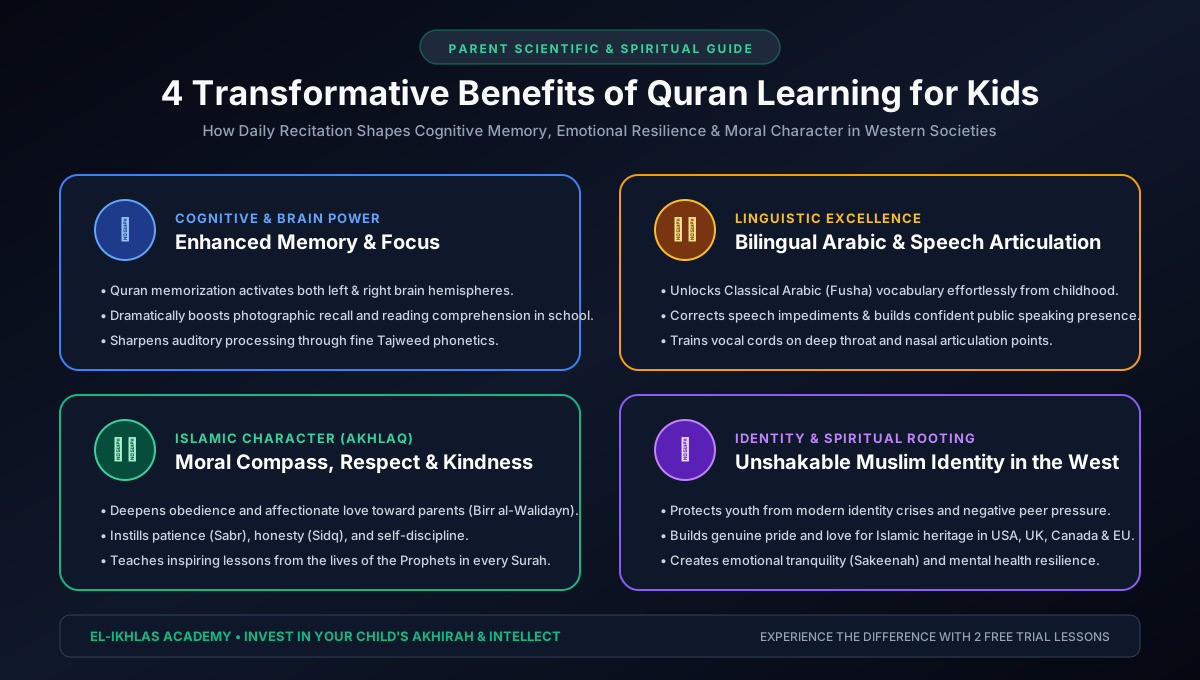
Guide Outline: What Parents Need to Know
- 1. Cognitive & Neurological Advantages (Brain Plasticity)
- 2. Linguistic Eloquence & Bilingual Advantage
- 3. Moral Architecture: Nurturing Akhlaq & Empathy
- 4. The Identity Shield: Preserving Faith in North America & Europe
- 5. The Crown of Light: Spiritual Honors for Parents in the Akhirah
- 6. Frequently Asked Questions
1. Cognitive & Neurological Advantages (Brain Plasticity)
Modern developmental neuroscience confirms that children's brains possess remarkable neuroplasticity between ages 4 and 12. Memorizing the Quran requires the synchronized integration of visual scanning (reading Arabic text from right to left), auditory analysis (hearing Tajweed rules), and oral-motor coordination (articulating difficult sounds).
Hippocampus Expansion
Daily Quran memorization physically enlarges the hippocampus—the brain's center for long-term memory and spatial recall. Children who memorize Surahs routinely excel in school examinations and math problem solving.
Sustained Focus & Attention Span
In an age of dopamine addiction, short-form video clips, and ADHD symptoms, 30 minutes of disciplined Quran recitation trains children to sustain deep concentration for extended periods.
2. Linguistic Eloquence & Bilingual Advantage
Classical Arabic (Fusha) is widely recognized as one of the most structurally rich and phonetically complex languages on Earth. Learning Quranic Tajweed at a young age unlocks:
- Speech Clarity & Diction: The intricate articulation points (Makharij) exercise vocal cords, preventing or correcting common speech slurs and lisping.
- Rapid Language Acquisition: Bilingual children who master Arabic phonetics learn secondary European and Asian languages with significantly higher speed and accent accuracy.
- Direct Access to Islamic Texts: Your child will understand their Salah (prayers), Adhkar, and Duas directly without feeling reliant on awkward translations.
3. Moral Architecture: Nurturing Akhlaq & Empathy
The Quran is not just letters; it is Divine wisdom and ethical guidance. When young minds recite stories of Prophet Yusuf's forgiveness, Prophet Musa's courage, Prophet Ibrahim's conviction, and Prophet Muhammad's ﷺ gentle mercy, these virtues become ingrained as core personality traits:
Reverence & Kindness Toward Parents (Birr al-Walidayn)
Surahs like Luqman and Al-Isra teach children profound respect, softness, and gratefulness toward their mothers and fathers, combating modern rebellious behaviors.
Integrity, Honesty & Self-Accountability
Knowing that Allah sees all actions (Al-Basir) and hears all words (As-Sami') fosters internal integrity (Ihsan), so children act righteously even when parents and teachers are not watching.
4. The Identity Shield: Preserving Faith in North America & Europe
For Muslim parents raising families in the United States, Canada, the UK, or Australia, one of the greatest anxieties is cultural assimilation and loss of Islamic identity among youth.
When a child connects with an inspiring Egyptian Sheikh or Sheikha 3 times a week, they build an affectionate, dignified spiritual relationship. The Quran ceases to be an alien weekend chore and becomes their personal sanctuary of calm and belonging.
5. The Crown of Light: Spiritual Honors for Parents in the Akhirah
Beyond all worldly advantages, the supreme reward for teaching your child the Quran is promised in the hereafter. Prophet Muhammad ﷺ stated:
"Whoever recites the Quran, learns it, and acts according to it, will have placed upon his parents on the Day of Resurrection a crown of light whose radiance is like that of the sun..." (Sunan Abi Dawud)
Every single letter your child recites generates continuous ongoing charity (Sadaqah Jariyah) that flows into your balance of deeds forever.
Quran & Child Development FAQs
Answers regarding appropriate starting ages, academic performance correlation, and identity reinforcement.
Child psychologists and Quranic educators recommend introducing oral listening from infancy, and structured interactive lessons (such as Noorani Qaida) between ages 4 and 6, when cognitive language acquisition is at its peak.
Was this Quran Guide helpful?
Your feedback helps us refine our academic curriculum and guides for Muslim families worldwide.
Related Quran & Tajweed Master Guides
Best Online Quran Classes for Kids: Complete Parent Guide
1-on-1 interactive lessons, certified Al-Azhar teachers, and Noorani Qaida roadmap for children.
How to Memorize the Quran Online: The Definitive Hifz Guide
The 3-tier Sabaq, Sabqi, and Manzil formula for permanent Quran retention without forgetting.
Best Online Tajweed Classes & Rules: A Complete Beginner's Guide
Makharij al-Huruf, 4 rules of Noon Sakinah & Tanween, and Madd lengths with Egyptian scholars.
Explore Our Accredited 1-on-1 Online Courses
Choose the specialized track that fits your age, goals, and daily schedule.
Authoritative Scholarly Citations & Global References
For educational authenticity and academic verification, our curriculum adheres strictly to standards established by globally recognized Islamic institutions and canonical resources:
Give Your Child the Gift of the Holy Quran Today
Start with 2 free 1-on-1 trial sessions. Our gentle, certified tutors make Quran learning enjoyable, gamified, and deeply rewarding for young minds.